The Complete Junior Golf Pathway in Florida: From Beginner to College Golf
February 19, 2026 4 min read
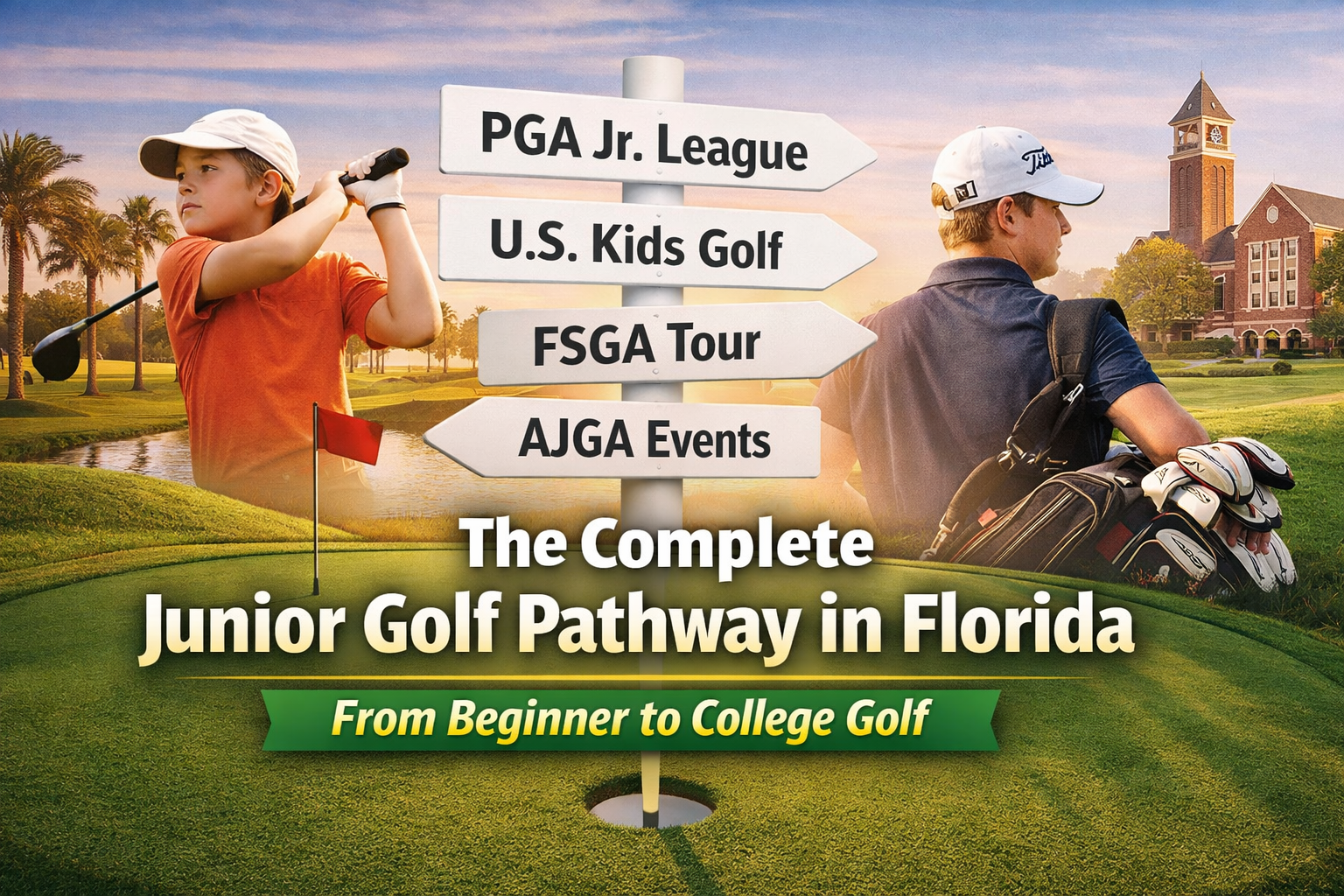
Confused about junior golf in Florida? This guide explains the full pathway—from beginner programs to elite AJGA events—and how parents can make smart development decisions.
Florida is one of the strongest junior golf states in the country. With year-round play, elite coaching, and nationally ranked tournaments, families have more opportunity than ever.
But that opportunity can also feel overwhelming.
Should your child start with PGA Jr. League?
When is US Kids Golf the right fit?
How competitive is the Florida Junior Tour?
When does AJGA become realistic?
This guide breaks down the junior golf pathway in Florida — by age, skill level, and long-term goals — so parents can make smart development decisions at every stage.
Stage 1: Getting Started (Ages 5–12)
For beginners and developing players, the focus should be fun, fundamentals, and confidence — not rankings.
PGA Jr. League: The Best First Step for Many Kids
PGA Jr. League introduces kids to competition in a team format using a scramble structure. This reduces pressure and builds social confidence.
✔ Great for beginners
✔ Team environment
✔ Skill-appropriate competition
✔ Encourages love of the game
For many Florida families, PGA Jr. League is the ideal introduction before moving into individual stroke-play tournaments.
The First Tee: Skills + Character Development
Programs like The First Tee help kids learn both golf fundamentals and life skills in a structured environment.
This is a strong option for:
- Kids brand new to golf
- Families wanting structured weekly programming
- Players not yet ready for tournament golf
The goal at this stage is not trophies — it’s building athletic habits and enjoyment.
U.S. Kids Golf: Learning to Compete
As juniors gain confidence, many Florida families move into U.S. Kids Golf tournaments.
U.S. Kids Golf offers age-specific yardages and divisions, helping players compete fairly against similar-aged golfers. Events range from local tours to state invitationals and larger championships. They are:
✔ Ideal for ages 6–14
✔ Age-based divisions
✔ Development-focused competition
✔ Clear progression pathway
For many junior golfers in Florida, this is where they learn how to:
- Post scores
- Handle pressure
- Develop course management skills
If you’re exploring events, US Kids offers many tournaments all over Forida, like Orlando, Tampa, Space coast, West Palm Bay and More.
Stage 2: Competitive Growth (Ages 13–15)
As players enter middle school and early high school, competition becomes more serious.
This is a critical development window.
Distance increases.
Scoring expectations rise.
College conversations begin.
Florida State Golf Association (FSGA) Junior Tour
The Florida Junior Tour (FJT), operated by the Florida State Golf Association, is one of the most respected junior tours in the state.
✔ Statewide competition
✔ Nationally ranked events
✔ College coach visibility
✔ Futures and Championship divisions
Many of Florida’s strongest juniors compete here before advancing to national tours.
If you are reviewing event options, explore our Florida Junior Tour Tournament Listings
What Parents Should Focus On in This Stage
At ages 13–15, development shifts from “learning golf” to “learning how to score.”
Top juniors at this level work on:
- Wedge distance control (80–120 yards)
- Putting speed control
- Emotional resilience
- Strategic course management
Parents should prioritize:
- Playing the right level events (not just the biggest ones)
- Tracking statistics (fairways, greens, putts, up-and-downs)
- Consistent coaching rather than frequent swing changes
This stage often determines long-term trajectory.
Stage 3: Elite & College-Track Golf (Ages 16–18)
For high school players aiming at college golf, tournament selection becomes strategic.
Exposure matters.
Rankings matter.
Scoring consistency matters.
American Junior Golf Association (AJGA)
The AJGA is one of the premier junior golf organizations in the country.
✔ National elite competition
✔ Performance Based Entry system
✔ Direct college recruiting exposure
✔ Scholarship opportunities
AJGA events feature top juniors from across the country and internationally.
Most Florida players who compete in AJGA events have already:
- Proven themselves at the FSGA level
- Maintained strong scoring averages
- Built tournament résumés
You can explore upcoming tournaments for AJGA here: Florida Junior Golf Tournament Directory
Understanding the Florida Junior Golf Progression
While every player’s path is different, a common progression looks like this:
PGA Jr. League or First Tee →
U.S. Kids Golf →
Florida Junior Tour (FSGA) →
AJGA & National Events →
College Golf
Some players skip stages.
Some stay longer in certain levels.
The key is matching competition level to readiness.
The Biggest Mistake Florida Golf Parents Make
One of the most common mistakes is moving up too quickly.
Playing elite events before a player is ready can:
- Hurt confidence
- Inflate scoring averages
- Create unnecessary pressure
Instead, focus on:
✔ Skill development first
✔ Scoring consistency second
✔ Exposure third
Development drives opportunity — not the other way around.
How to Choose the Right Events for Your Junior Golfer
Ask yourself:
- Can my child consistently break 45 (9 holes) or 80 (18 holes)?
- Are they emotionally ready for tournament pressure?
- Are they improving month to month?
- Do they enjoy competition?
If yes, consider moving up a level.
If not, stay where growth is steady.
Florida offers one of the deepest junior golf ecosystems in the country. The key is navigating it wisely.
Building a Long-Term Junior Golf Plan in Florida
Junior golf in Florida offers tremendous opportunity — but success comes from structured progression.
Start with fun.
Build fundamentals.
Add competition gradually.
Focus on scoring.
Then pursue exposure.
The players who succeed long term aren’t just talented.
They are developed intentionally.
And the parents who understand the pathway make all the difference.