Junior Golf Swing Speed by Age: What’s Normal, What’s Not, and When to Worry
March 2, 2026 5 min read
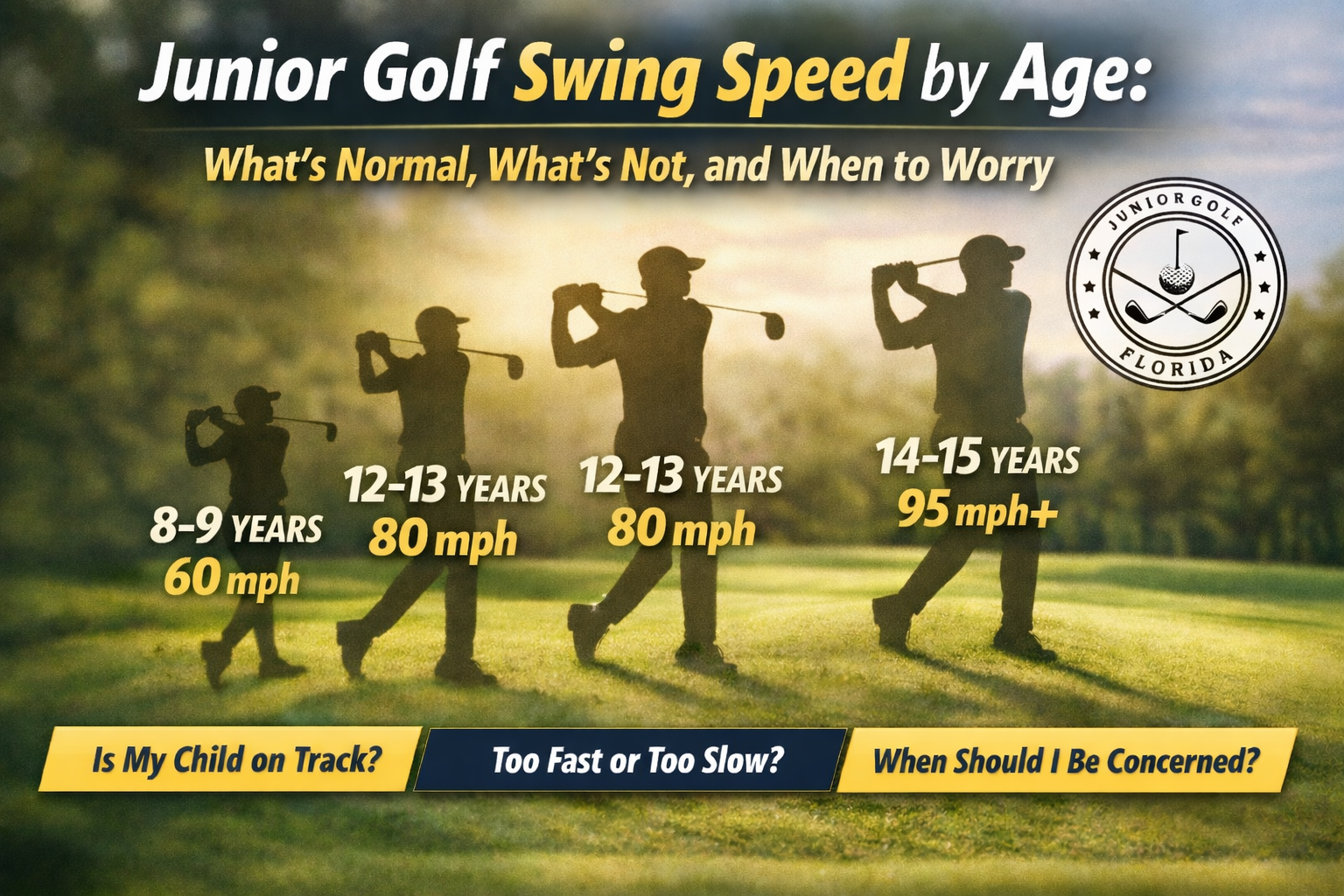
Learn what junior golf swing speeds look like by age, what experts say about speed training, and how to support healthy development without unnecessary pressure.
If you’re a junior golf parent, you’ve probably wondered:
Is my child’s swing speed normal?
Should we be training for more speed?
Are we falling behind?
You’re not alone.
In competitive junior golf — especially in strong golf states like Florida — it can feel like distance is everything. But when it comes to junior golf swing speed by age, the reality is far more nuanced than most range conversations suggest.
Let’s break down what’s normal, what experts say, and when (if ever) you should worry.
What Does Swing Speed Actually Mean?
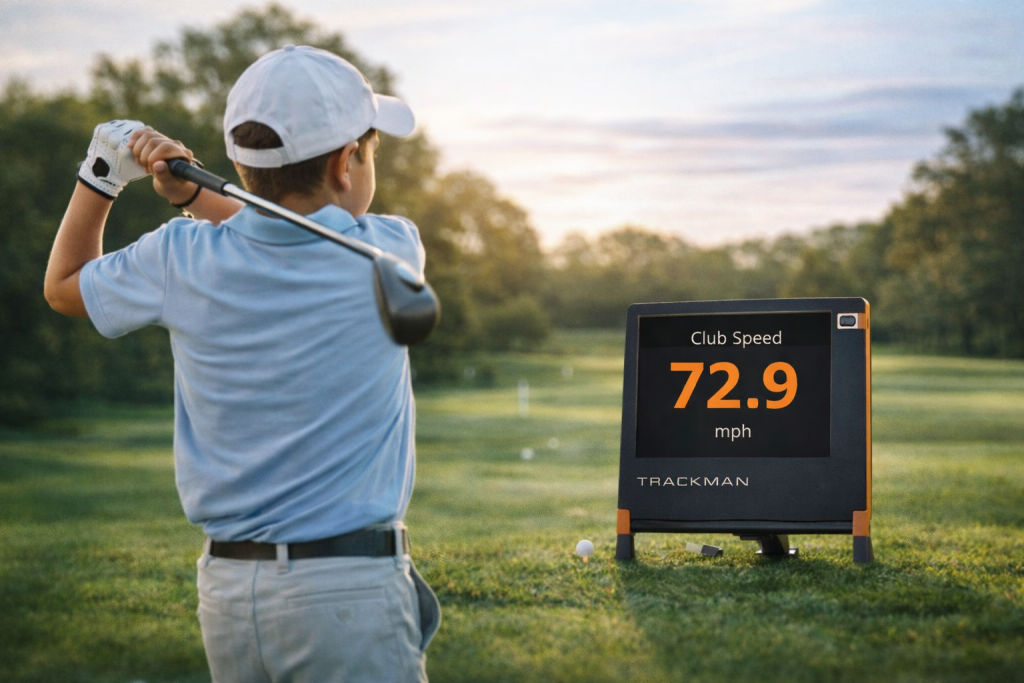
Swing speed, or club head speed, measures how fast the club is traveling at impact. More speed can create more distance — but only when paired with solid mechanics and centered contact.
Titleist Performance Institute (TPI), one of the most respected organizations in golf performance and biomechanics, has published age-based swing speed percentile data showing that development varies widely among junior golfers.
Their research emphasizes that sequencing, mobility, strength, and coordination contribute significantly to speed development — not just effort.
In other words, speed is built on athletic development, not forced.
Junior Golf Swing Speed by Age (Research-Based Ranges)
Below are broad driver swing speed ranges compiled from junior performance data and launch monitor research. These are not “standards” — they are general development ranges.
| Age Group | Driver Swing Speed Range (mph) | Notes for Parents |
|---|---|---|
| 8–9 years old | 55–65 mph | Focus on balance, rhythm, and coordination. |
| 10–11 years old | 65–80 mph | Growth differences begin appearing more noticeably. |
| 12–13 years old | 75–90 mph | Many juniors gain speed naturally during early puberty. |
| 14–15 years old | 85–100+ mph | Some approach adult speeds depending on physical maturity. |
These ranges align with junior swing speed percentiles published by Titleist Performance Institute, which show wide developmental variation within each age group.
Additional launch monitor data charts also reinforce similar ranges while emphasizing that height, weight, and biological maturity strongly influence performance differences.
Golf swing speed charts provide useful benchmarks by breaking down average club head speeds based on age, skill level, gender, and playing experience. These charts also help illustrate how swing speed translates into driving distance, giving parents and players clearer context around performance expectations. Many golfers — especially competitive juniors — enjoy comparing their numbers to peers or even professional players using visual data like charts and graphs. Today, there are multiple swing speed studies available that categorize performance by handicap level, years playing, and physical development. While these charts offer helpful perspective, they are meant to serve as reference points rather than strict standards, since individual growth and athletic development can vary significantly from player to player.
For a detailed breakdown of average swing speeds by age, skill level, and how club head speed translates to driving distance, you can review this comprehensive swing speed chart analysis.
The key takeaway for junior golf parents: two 10-year-olds can differ by 15–20 mph and both be completely on track.
Why Swing Speed Varies So Much in Junior Golf
At age 10, one child might be 4’6″ and 65 pounds. Another might be 5’3″ and 120 pounds.
Biological age often differs from chronological age.
Sports science literature on early athletic development consistently highlights that children mature at different rates, and early specialization can increase risk of injury or burnout when not managed properly.
Growth, neuromuscular coordination, limb length, and muscle development all influence swing speed progression.
Comparison without context creates unnecessary pressure.
What Experts Say About Speed Training for Juniors
Overspeed training systems, such as those using lighter training clubs to increase neuromuscular response, have shown measurable speed gains when used properly and under supervision.
SuperSpeed Golf outlines the science behind overspeed training and its intended structure in their performance research.
However, many junior golf coaches and sports performance professionals caution against aggressive speed training before proper physical development and movement quality are established.
Youth golf fitness specialists emphasize that foundational athletic skills — including running, jumping, balance, coordination, and controlled resistance training — should precede dedicated speed protocols.
Across the board, experts tend to agree on one principle:
Build the athlete first. Layer speed later.
The Growth Plate Conversation
Growth plates are areas of developing cartilage tissue near the ends of long bones in children and adolescents. During growth spurts, these areas are more vulnerable to stress.
Pediatric sports medicine research consistently advises caution with repetitive high-force training during active growth phases.
While golf-specific research on growth plates is still evolving, many junior golf coaches adopt a conservative approach during peak growth years.
This is why you often hear recommendations such as:
- Avoid aggressive overspeed protocols during rapid growth
- Use resistance bands instead of heavy weights
- Prioritize mobility and sequencing
There is not universal agreement on timing — but caution during growth periods is widely supported in youth athletics.
What Actually Lowers Scores in Junior Golf?
Here is something we consistently see in junior golf tournaments in Florida:
Distance helps — but scoring wins.
Players who:
- Hit fairways
- Hit greens
- Convert short-game opportunities
- Avoid penalty strokes
often outperform players who simply swing faster.
The Emotional Side of Swing Speed
This is the part that rarely gets talked about.
On the range or on social media, you may see:
- A 12-year-old driving it 260 yards
- An 11-year-old swinging 100 mph
- Parents discussing speed training programs
But snapshots don’t show long-term outcomes.
Long-term athlete development models consistently demonstrate that early physical dominance does not guarantee sustained competitive success. Late developers often catch up — and sometimes surpass — early bloomers once physical maturity levels out.
Development is rarely linear.
When Should Parents Be Concerned?
You may want to consult a qualified junior golf coach if:
- Your child experiences pain during or after swinging
- Mechanics break down when attempting to swing harder
- Anxiety about distance affects enjoyment
- Speed gains come with loss of control
If you’re looking for development-focused instruction, you can browse junior golf coaches in Florida through our directory.
A Smarter Long-Term Approach for Junior Golf Parents
Instead of asking:
“How fast should my 10-year-old swing?”
Consider asking:
- Is my child improving accuracy?
- Are they learning course management?
- Are they building overall athleticism?
- Are they enjoying the process?
Speed often increases naturally during puberty when strength and coordination align.
Forcing it too early can disrupt mechanics or create unnecessary pressure.
Final Thoughts: What’s Normal?
Normal is:
- Wide variation
- Uneven growth
- Temporary plateaus
- Sudden jumps during puberty
There is no universal number.
There is only development.
If you want weekly research-backed insights, tournament updates, and guidance for junior golf parents, subscribe to The Junior Tee newsletter.
And if you’re navigating the competitive junior golf landscape, our Junior Golf In Florida directory at is built to help parents find tournaments, coaches, and junior golf organizations that support healthy development.
Because in the long run, it’s not about who swings fastest at 10.
It’s about who is still improving — and still loving the game — at 18.