Why Your Junior Golfer Should Learn Golf Backwards — Starting From 30 Yards Out
May 9, 2026 6 min read
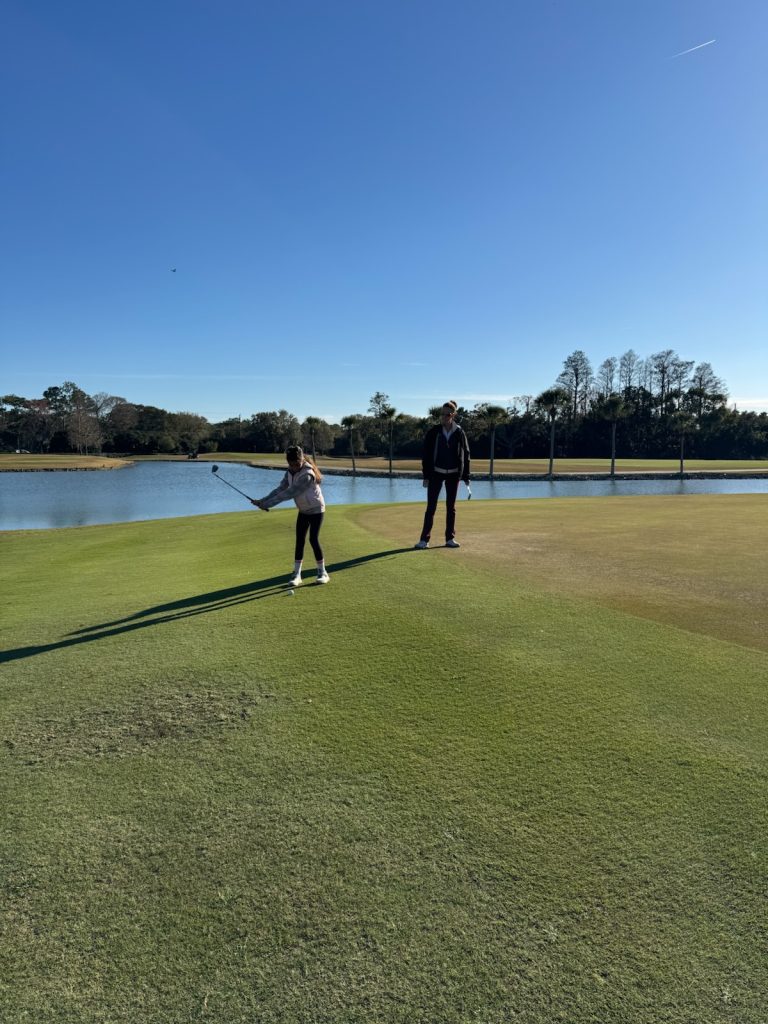
Most parents hand their junior golfer a driver and head straight to the range. But what if the entire approach is backwards? Discover why starting at 30 yards — and learning golf from the green back — is the same method Earl Woods used to develop Tiger Woods, and how it can help your junior golfer shoot lower scores faster. Junior Golf in Florida has everything you need to support your junior golf
Most parents hand their junior golfer a driver and head straight to the range. Balls fly. Some go straight. Most don’t. After an hour of frustration, nobody is sure what they actually learned — and the score on Saturday reflects it.
What if the entire approach was backwards?
More accurately: what if forwards is backwards — and the real path to shooting lower scores starts at the green, not the tee?
This isn’t a new idea. It’s actually how one of the greatest golfers of all time was taught to play. Earl Woods taught Tiger how to play the game from the green back — building the short game first, then working outward to longer shots. Tiger himself confirmed this approach in his own book, saying the instruction “is structured differently from other books, beginning with the green and progressing to the tee. That’s how my dad taught me, from the smallest swing to the biggest.” Rotary Swing
If it was good enough for Earl Woods and Tiger, it’s worth a serious look for your junior golfer.
What “Green to Tee” Actually Means
The concept is simple. Instead of teaching golf from the tee box outward, you start your junior golfer at the hole and work backwards. You begin with putting. Then short chip shots. Then pitches from 30 yards. Then 50. Then half-swings with irons. Then full shots. The driver comes last — not first.
The idea is grounded in logic: golf is a game scored by the number of strokes, not by distance covered. Nearly 60% of all golf shots happen within 100 yards of the hole. Teaching a junior golfer to feel comfortable around the green before they ever take a full swing means they build the most important parts of their game first — and they build confidence along the way.
Starting at 30 yards is a perfect entry point. It’s close enough that a beginner can make solid contact without a complicated swing, far enough to introduce trajectory, landing spot awareness, and the critical skill of “reading” a shot before you hit it.
Why This Method Works for Junior Golfers Specifically
Junior golfers are not small adults. Their physical development, attention spans, and emotional connection to success are all different from grown players. When you put a 9-year-old on a tee box and ask them to hit a driver 200 yards, you’re setting them up for frustration before they’ve had a chance to fall in love with the game.
But stand that same 9-year-old 20 feet from a cup with a putter, and they can make a putt on their very first try. That early success is not small — it’s everything. It creates the emotional hook that keeps them coming back.
The green-to-tee method gives junior golfers regular wins. A chip that rolls close to the pin. A 30-yard pitch that lands where they aimed. These small victories add up, and they build the kind of confidence that shows up during a tournament when things get tough.
Florida junior golfers competing in FSGA events or on the HJGT Florida circuit know that short game breakdowns are often the difference between a good round and a great one. The ability to get up-and-down from inside 30 yards is a skill that wins tournaments at every age level.
The 30-Yard Starting Point: A Practical Guide for Parents
Here’s how to actually implement this with your junior golfer at the course or practice facility.
Week 1–2: The Green Start with putting only. Work on distance control — not just making everything, but getting the ball to stop within 3 feet of the hole from 10, 20, and 30 feet. This is exactly what a solid putting routine trains your junior to do automatically under pressure.
Week 3–4: 10 Yards Off the Green Introduce bump-and-run chip shots from just off the fringe. Use a 7-iron or 8-iron. The goal is a low shot that lands close to the green and rolls to the hole like a long putt. Emphasis: picking a landing spot.
Week 5–6: 30 Yards Out Now you’re in pitch shot territory. This is where the real learning accelerates. A 30-yard shot requires enough swing to generate height and spin, but not so much that mechanics fall apart. Practice landing the ball on specific spots — not just “near the green.” This trains course management instincts early.
Month 2 and Beyond: Work Your Way Back Add 50-yard shots. Then 75. Then a half-swing with a 9-iron. The full swing should feel like a natural extension of everything they’ve already mastered — not the starting point of a journey that makes no sense yet.
For coaches looking to structure junior programs around this model, you’ll find that students progress faster, retain more, and show up to practice with more enthusiasm. If you’re a Florida-based coach who works with developing junior players, listing your coaching services on JGIF connects you with parents in your area who are actively searching for exactly this kind of approach.
The Tiger Woods Proof
At the 2006 British Open, Tiger Woods pulled out his driver only two times across all four rounds and 72 holes. He teed off with four and five irons, aiming shots to specific edges of fairways rather than the middle. Other players constantly outdrove him — and he won the tournament going away. The reason: while most players thought about the game tee to green, Tiger went green to tee, studying each hole to determine the ideal putt first, then working backward to plan every shot before it was hit.

That’s not just a course management tip. It’s a worldview about what golf actually is. And it came directly from how Earl Woods taught him to play the game as a child.
Even Tiger’s warm-up routine reflected this philosophy — the majority of his pre-round practice focused on shots from 150 yards and in, making up more than 75 percent of his range session. Most amateur golfers, and too many junior golfers, do the opposite — they spend the bulk of their practice time on the range beating drivers and rarely touch a wedge until they’re standing 40 yards from the flag mid-round.
What This Means for Parents as the First Coach
You don’t need to be a golf pro to implement this with your junior golfer. You need a short game area, a few balls, and patience. Some of Florida’s best junior golf facilities have excellent practice greens and chipping areas — you can find courses near you through the Junior Golf in Florida course directory.
The most important thing you can do is resist the urge to skip ahead. The temptation to get your junior hitting full shots is real — it looks more like golf. But the short game is where strokes are saved, where confidence is built, and where the foundation for everything else is laid.
As we’ve written about before in our piece on parent caddies and course management, the mental side of junior golf — knowing what shot to hit and why — is just as important as mechanics. The green-to-tee method builds that intelligence naturally, because juniors learn to read shots, pick targets, and manage expectations before they ever step on a tee box.
The Bottom Line
Golf is a game of proximity to the hole — not distance from the tee. Every stroke your junior golfer saves inside 50 yards is a stroke they don’t need to make up elsewhere. Teaching the game from the green back isn’t unconventional. It’s the method Earl Woods used to develop the greatest golfer of all time, and it’s the method that gives junior golfers the fastest path to real, lasting improvement.
Start at 30 yards. Build outward. Watch the scores fall.
If you’re looking for coaches, tournaments, or organizations in Florida that understand junior golf development the right way, explore the full Junior Golf in Florida directory — built specifically for parents, coaches, and organizations growing the next generation of Florida golfers.
Are you using a green-to-tee approach with your junior golfer? Drop a comment below or share this post with a golf parent who needs to hear it. Follow us on YouTube, Instagram, Facebook, and Twitter @JuniorGolfinFL for more junior golf tips every week.